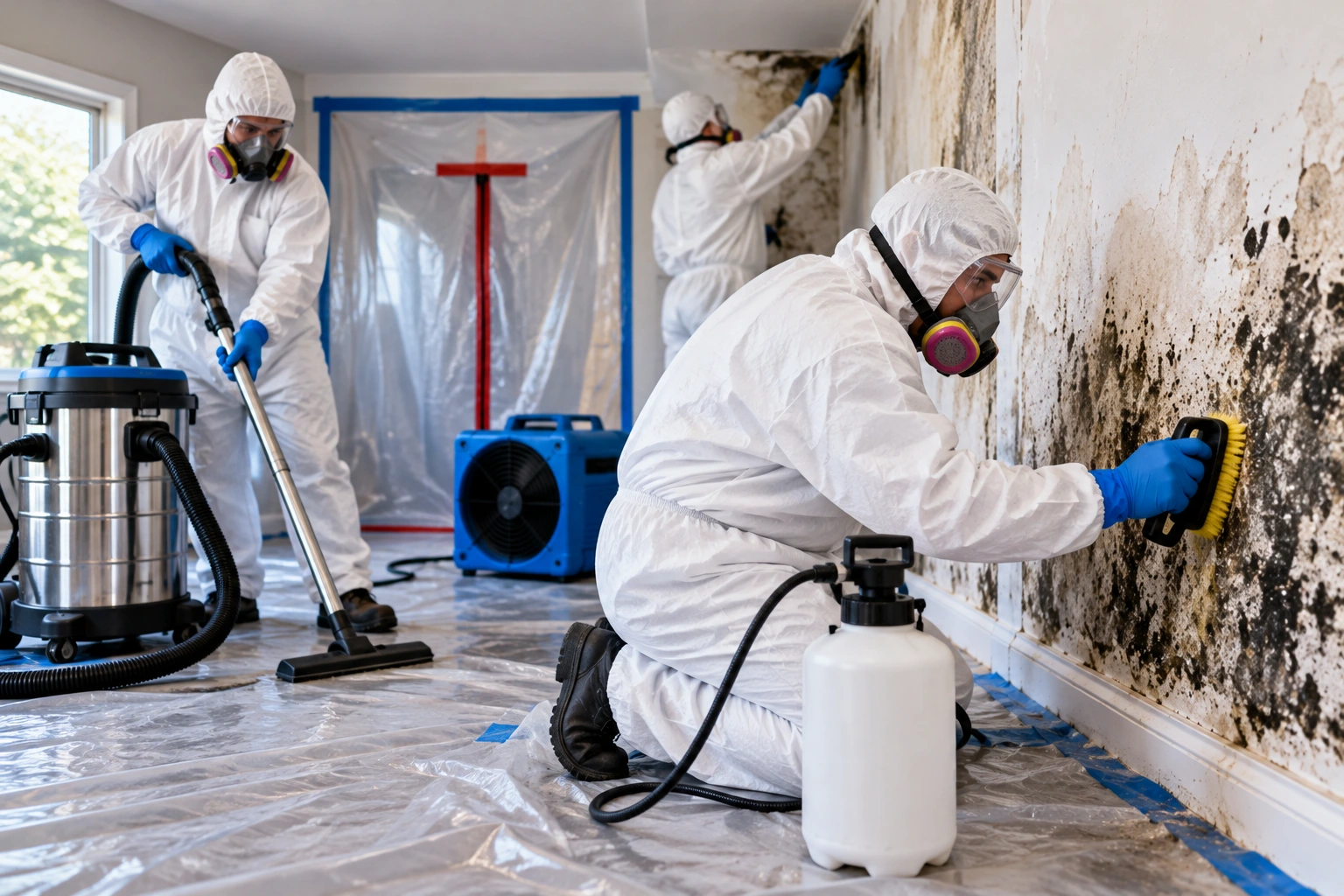
Bathroom growth may involve shower surfaces, damp ceilings, or materials near a plumbing leak. The response depends on the surface, the damage, and whether moisture keeps returning.
Information reviewed against EPA mold cleanup guidance. MoldRemoverr.com is an independent referral website, not a remediation contractor. Independent providers confirm services, credentials, availability, scope, and pricing.
Clear scope of work
Understand what the plan includes.
Look at the moisture
Address the source of the concern.
A practical next step
A plan for your property.
01
Bathroom Moisture Sources
Condensation, inadequate exhaust, and plumbing leaks can leave surfaces or concealed materials wet. Note whether growth follows shower use or appears near a supply or drain line.
02
When Surface Cleaning May Be Insufficient
Recurring growth, soft drywall, peeling finishes, or damp cabinets may warrant further assessment. Cleaning tile will not fix a leak behind it or establish the condition of hidden materials.
03
Planning Bathroom Cleanup
Ask which surfaces can be cleaned, whether damaged porous materials need removal, and what moisture repairs are separate. EPA mold cleanup guidance advises cleanup and drying before painting or caulking affected surfaces.
04
Questions About Bathroom Mold
Discuss ventilation and plumbing separately from the cleaning estimate. For broader home planning, read residential mold remediation.
A little clarity goes a long way
Bathroom Mold FAQ
Have something else on your mind? Let’s talk about your property.
Can ventilation resolve every bathroom mold problem?+
No. Exhaust can help with condensation, but a plumbing leak or damaged building material needs its own assessment and repair.
Why does growth return after wiping it away?+
Moisture may still be present, or affected materials may extend beyond the visible surface. Ask about the source and scope rather than repeatedly covering the stain.